








Non-Surgical Jowl Lift: Best Options, Limitations, and Facelift Comparison

Non-surgical jowl lift treatments offer a way to improve sagging along the jawline without surgery, using methods like dermal fillers, thread lifts, ultrasound, and radiofrequency to tighten skin, restore volume, or subtly lift tissue.
However, results of a non-invasive jowl lift are temporary and generally less dramatic than a surgical facelift. Most treatments require ongoing maintenance, and their effectiveness depends on factors such as skin quality, age, and the degree of sagging.
While non-surgical jowl lift treatments can enhance contour and delay the need for surgery, they do not reposition deeper tissues or stop the aging process.
Clinics such as Rememore focus on personalized treatment planning, often combining techniques to achieve balanced, natural results. For patients seeking subtle enhancement and flexibility, non-surgical options are a practical choice, while those with more advanced sagging may benefit more from a surgical approach.
What Is a Non-Surgical Jowl Lift?
A non-surgical jowl lift includes cosmetic procedures that aim to enhance the jawline and reduce sagging without incisions or general anesthesia.
Non-surgical jowl lift treatments rely on technologies like energy-based devices, injectables, or dissolvable threads to improve skin firmness and contour.
Unlike surgery, which physically repositions tissues, non-surgical options work by stimulating collagen, adding volume, or temporarily lifting the skin. This makes them most suitable for early to moderate signs of aging rather than advanced sagging.
Different techniques address jowls through distinct mechanisms:
-
Collagen stimulation: Encourages natural skin tightening over time
-
Volume restoration: Replaces lost facial fullness to lift sagging areas
-
Mechanical lifting: Uses threads or fillers to reposition tissue
-
Fat reduction: Targets excess fat contributing to heaviness
Each approach produces varying degrees of lift and definition.

Best Non-Surgical Jowl Lift Options
There is no single “best” treatment for everyone. The most effective approach depends on skin quality, age, degree of sagging, and aesthetic goals.
-
Dermal Fillers: Dermal fillers are a popular non-surgical jowl lift option that restore lost volume in the cheeks and jawline to lift sagging skin and improve facial contour. Results are visible immediately and typically last between 6 and 18 months.
-
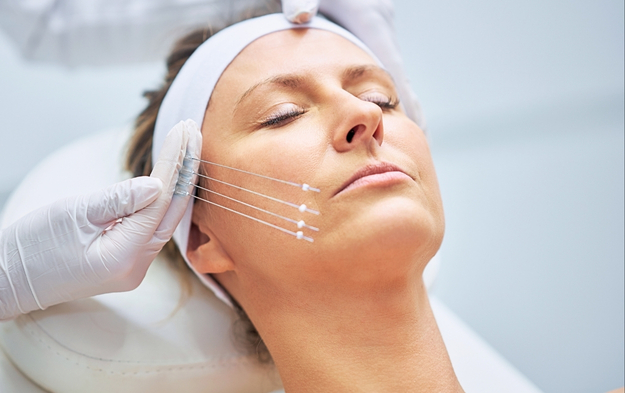
Thread Lift: A thread lift for jowls uses dissolvable sutures to lift and reposition sagging skin while stimulating collagen production for longer-term support. It delivers instant, natural-looking results that can last up to 1–2 years.
-
Ultrasound-Based Treatments: Ultrasound-based skin tightening treatments target deep tissue layers to stimulate collagen and gradually lift sagging jowls without surgery. Results appear over 2–3 months and are ideal for mild to moderate skin laxity.
-
Radiofrequency Treatments: Radiofrequency (RF) treatments tighten loose skin by heating underlying layers to boost collagen production and improve firmness over time. Multiple sessions are usually required to achieve optimal non-invasive jowl lift results.
-
Fat-Dissolving Injections: Fat-dissolving injections reduce excess fat under the jawline, helping define the lower face and minimize the appearance of jowls. These injections are best for patients with fullness rather than loose skin and may cause temporary swelling.
|
Treatment Type |
Best For |
Results Timeline |
Longevity |
Downtime |
| Dermal Fillers | Volume loss, contouring | Immediate | 6–18 months | Minimal |
| Thread Lift | Mild sagging | Immediate | 12–24 months | Few days |
| Ultrasound (Ultherapy) | Skin tightening | 2–3 months | 12–18 months | None |
| Radiofrequency (RF) | Early laxity | Gradual | Maintenance needed | Minimal |
| Fat-Dissolving Injections | Excess fat | Weeks | Permanent (fat removal) | Moderate swelling |
Who Is a Good Candidate for a Non-Surgical Jowl Lift?
Not every patient will benefit equally from non-surgical treatments, this also includes non-surgival jowl lifts procedures.
Ideal candidates typically:
-
Have mild to moderate jowling
-
Maintain good skin elasticity
-
Prefer minimal downtime
-
Are not ready for surgery
On the other hand, less suitable candidates:
-
Individuals with significant skin laxity
-
Those seeking dramatic, long-lasting lifting
-
Patients with heavy or advanced sagging
In such cases, surgical options may provide more effective outcomes.
Limitations of Non-Surgical Jowl Lift
While non-invasive bowl lift treatments are appealing, they come with certain limitations that patients should understand before proceeding.
Key limitations include:
-
Temporary Results: Most treatments require maintenance
-
Subtle Improvements: Cannot replicate surgical lifting
-
Multiple Sessions Needed: Especially for energy-based treatments
-
Cost Over Time: Repeated treatments can add up
Non-surgical jowl lift methods improve appearance but do not stop the aging process or reposition deeper tissues permanently.

Non-Surgical Jowl Lift vs Facelift
Comparing non-surgical treatments with a traditional face lift highlights the differences in effectiveness, longevity, and overall transformation.
Non-surgical treatments are better if a patient:
-
Wants gradual, natural improvements
-
Prefers minimal recovery time
-
Is in early aging stages
On the other hand, facelift is better if a patient:
-
Has significant sagging
-
Wants long-lasting results
-
Seeks a more defined jawline transformation
|
Feature |
Non-Surgical Jowl Lift |
Surgical Facelift |
| Invasiveness | Non-invasive/minimally invasive | Fully surgical |
| Results | Subtle to moderate | Dramatic and long-lasting |
| Longevity | Months to 2 years | 10+ years |
| Downtime | Minimal | Several weeks |
| Cost (Long-Term) | Repeated costs | One-time higher cost |
Long-Term Outlook
Non-surgical jowl lift treatments can be an effective way to maintain a youthful appearance when used consistently over time. However, they are best viewed as part of a long-term aesthetic strategy rather than a one-time solution.
Many patients combine treatments, such as fillers with RF or ultrasound, to achieve more comprehensive results. Over time, transitioning to surgical options may become more beneficial as aging progresses.
Frequently Asked Questions
How long do non-surgical jowl lift results last?
Results vary depending on the treatment type, but most last between 6 months and 2 years.
Are non-surgical jowl lifts painful?
Most treatments involve minimal discomfort, often managed with topical numbing or mild anesthesia.
Can non-surgical treatments completely remove jowls?
They can improve the appearance but cannot fully eliminate moderate to severe sagging.
How many sessions are needed?
Some treatments require multiple sessions, while others (like fillers or threads) show results in a single session.
Is there any downtime?
Downtime is minimal, with most patients resuming normal activities within a day or two.

How Reviewed This Article ?
Prepared by the Rememore Editorial Board in collaboration with licensed physicians practising in Turkey.
-
Published Version
09/07/2026
-
Modified
09/07/2026 Rememore Staff
-
Medically Reviewed By



Other Blogs

Explore hair textures, from straight to coily, with a hair texture chart, porosity guide, and practical tips to identify natural hair patterns and improve hair care.
 Learn More

Learn how to sit after BBL, use a BBL pillow correctly, sleep safely, and follow a recovery timeline to protect fat transfer results.
Learn More

Learn how to grow hair faster with science-backed tips on hair growth vitamins, healthy foods, scalp care, natural remedies, and the hair growth cycle.
Learn More

Learn when to start lymphatic drainage massage after liposuction, its benefits for swelling reduction, recommended session schedules, and treatment costs.
Learn More

